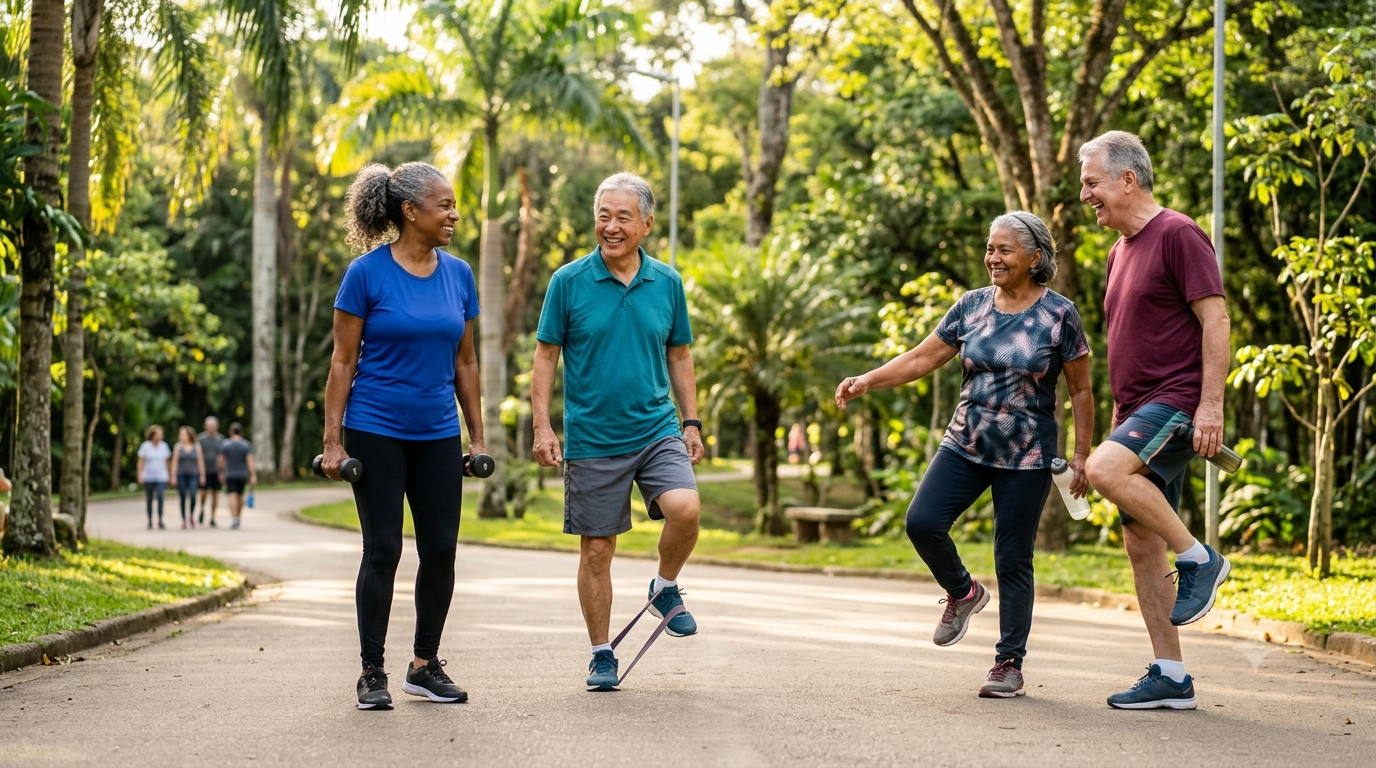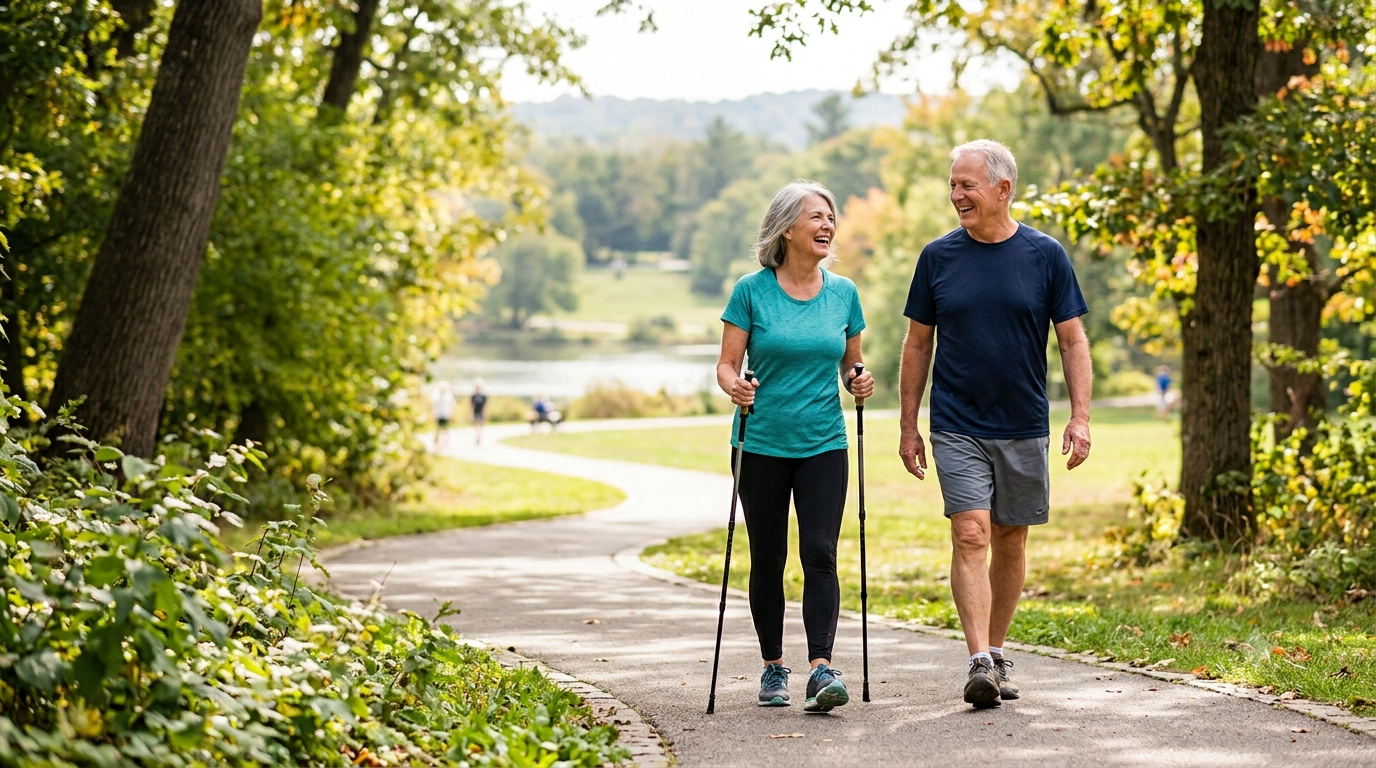
Many people believe that those with osteoarthritis or other joint conditions should avoid exercise to prevent further “wear and tear” on their joints. However, scientific evidence shows that the opposite is generally true.
For most people, regular exercise is an important part of osteoarthritis treatment. Physical activity can help reduce pain, improve mobility and strength, and preserve independence.
For older adults, staying physically active can also help maintain balance, physical function, and the ability to perform everyday activities.
Is exercise bad for people with osteoarthritis?
No.
When performed appropriately, exercise should not be viewed as something that further damages the joints.
Strengthening the muscles can improve the ability to perform movements and reduce some of the difficulties associated with osteoarthritis.
Exercise can also help reduce sedentary behavior, improve physical fitness, and maintain functional capacity.
Therefore, having osteoarthritis does not mean that a person needs to stop walking, doing strength training, or participating in other physical activities.
What are the benefits of exercise for older adults with osteoarthritis?
Regular exercise can provide several benefits, including:
- reduced pain;
- improved muscle strength;
- better mobility;
- improved physical function;
- better balance;
- improved walking ability;
- maintenance of flexibility;
- greater ease performing daily activities;
- improved quality of life;
- preservation of independence;
- reduced sedentary behavior.
The goal of exercise is not only to reduce pain. Improving the ability to move and perform everyday tasks is also an important part of osteoarthritis treatment.
What is the best exercise for people with osteoarthritis?
There is no single ideal exercise for everyone.
The best approach is usually to combine different types of physical activity according to each person’s physical condition, symptoms, and preferences.
Options include:
- aerobic exercise;
- muscle strengthening;
- flexibility exercises;
- balance exercises;
- coordination and movement-control exercises;
- aquatic exercise;
- programs combining different types of exercise.
A systematic review published in the BMJ in 2025 evaluated 217 randomized trials involving more than 15,000 people with knee osteoarthritis. The researchers compared different exercise modalities and found benefits for pain, physical function, walking ability, and quality of life. Aerobic exercise showed some of the most consistent benefits across the outcomes studied.
This does not mean that everyone should perform the same type of exercise. The best activity is one that can be performed regularly, safely, and according to each person’s individual needs.
Can aerobic exercise help osteoarthritis?
Yes.
Aerobic exercises include activities such as:
- walking;
- cycling;
- stationary cycling;
- swimming;
- water aerobics;
- other activities that gradually increase the heart rate.
In the BMJ systematic review, aerobic exercise provided important benefits for pain and physical function in people with knee osteoarthritis, as well as improvements in walking ability and quality of life.
For this reason, aerobic activities can be an excellent option for older adults with osteoarthritis, especially when they are adapted to individual physical capacity.
For people who experience significant pain when walking, water-based exercise or stationary cycling may be more comfortable alternatives.
Is strength training recommended for people with osteoarthritis?
Yes.
Strength training is one of the exercise modalities that can be included in osteoarthritis treatment.
It can be performed using:
- free weights;
- resistance machines;
- resistance bands;
- light weights;
- bodyweight exercises.
Strengthening the muscles of the legs can be particularly important for people with knee or hip osteoarthritis.
In addition to improving strength, resistance training can make activities such as getting up from a chair, climbing stairs, and walking easier.
The amount of resistance and number of repetitions should be adjusted to each person’s physical capacity.
Are balance exercises important for older adults?
Yes.
Balance tends to become increasingly important with aging.
Exercises that improve balance and movement control can complement aerobic and strength training.
Activities that may work on these abilities include:
- single-leg balance exercises, when safe;
- supervised balance exercises;
- tai chi;
- functional exercises;
- coordination activities.
For older adults with a history of falls or significant difficulty walking, these exercises should be adapted and may initially require professional supervision.
Can stretching help osteoarthritis?
Flexibility exercises can help maintain range of motion.
Stretching can be incorporated into an exercise routine, particularly when joint or muscle stiffness is present.
However, stretching should not be considered a substitute for strength training or aerobic exercise.
A complete exercise program may combine flexibility, strength, balance, and aerobic activities.
Is it better to exercise at home or at a gym?
Both options can work.
Home-based exercise can be a convenient alternative for people who have difficulty traveling or prefer to exercise at home.
A gym can provide access to exercise equipment and professional supervision, as well as make it easier to progressively increase resistance during strength training.
The most important factor is that the exercise program is appropriate and can be maintained over the long term.
Do you need to feel pain during exercise?
No.
Some discomfort may occur when a person starts a new exercise routine, particularly if they have been sedentary.
However, severe pain, a significant worsening of symptoms, or pain that persists for a prolonged period after exercise may indicate that the activity needs to be modified.
Exercise should progress gradually.
Instead of trying to perform a large amount of exercise from the beginning, it is generally better to start with an amount that is well tolerated and gradually increase it.
Can I walk if I have knee osteoarthritis?
In most cases, yes.
Walking can be part of an exercise program for people with osteoarthritis.
The distance, speed, and duration should be adapted to each person’s physical capacity.
People who experience significant pain while walking can start with shorter periods or use other forms of aerobic exercise, such as cycling or water-based activities.
The goal is to find an activity that is tolerable and can be performed regularly.
Is cycling good for people with osteoarthritis?
Cycling can be a good aerobic exercise option, particularly for people who experience discomfort while walking.
A stationary bike allows the intensity to be controlled and can be a practical option for exercising at home.
The seat height and resistance should be adjusted to avoid unnecessary discomfort.
Is water aerobics good for osteoarthritis?
It can be helpful.
Water-based exercise can be particularly useful for people who have difficulty performing activities that require greater weight-bearing.
Water reduces the load on the joints and allows people to perform movements that may be more difficult on land.
Water aerobics can combine aerobic exercise, strengthening, and mobility exercises.
Should people who are overweight exercise if they have osteoarthritis?
Yes.
For people with knee osteoarthritis who are overweight or have obesity, combining physical activity with weight management can be particularly important.
A randomized clinical trial published in JAMA followed 823 adults aged 50 years or older with knee osteoarthritis and overweight or obesity for 18 months.
The group that participated in a diet and exercise program experienced greater weight loss and improved physical function. Pain also improved, although the additional difference in pain between the groups was small and of uncertain clinical importance.
The diet-and-exercise group lost an average of approximately 7.7 kg, compared with 1.7 kg in the control group. Walking ability also improved.
These findings reinforce the idea that weight management and physical activity can work together in the treatment of osteoarthritis.
Does losing weight alone improve osteoarthritis?
Weight loss can help, particularly in people with overweight or obesity and knee osteoarthritis.
However, combining a healthy diet with physical activity offers additional benefits.
Exercise helps preserve or increase muscle mass and improve physical function, while weight loss can reduce the load placed on the joints.
Therefore, the goal should not simply be to lose weight, but to improve overall health and physical capacity.
Can older adults with heart disease exercise?
Many older adults with cardiovascular disease can benefit from physical activity, but some people require adaptations and supervision.
A 2026 scientific statement from the American Heart Association highlights that people considered to be at higher risk, including individuals with frailty or certain cardiovascular and other medical conditions, may require adaptations to their exercise programs.
In these situations, training may place greater emphasis on:
- strength;
- balance;
- flexibility;
- appropriately adapted aerobic exercise;
- supervision;
- specialized equipment when necessary.
Having a chronic disease does not automatically mean that a person should avoid exercise. The program should be adapted to the individual’s health conditions and physical abilities.
When is extra caution necessary?
Although exercise is recommended for most people with osteoarthritis, certain situations require professional assessment before starting or increasing physical activity.
Medical guidance is particularly important when there is:
- severe or persistent pain;
- significant joint swelling or inflammation;
- substantial difficulty walking;
- frequent falls;
- dizziness during physical activity;
- shortness of breath that is disproportionate to the level of exertion;
- chest pain;
- uncontrolled heart disease;
- other medical conditions that may limit exercise.
People with multiple chronic conditions or those taking several medications may also benefit from an individualized assessment.
Do frail older adults need to avoid exercise?
Not necessarily.
Frailty can make exercise more challenging, but it may also increase the importance of maintaining or regaining physical capacity.
The American Heart Association highlights that higher-risk populations may have low cardiorespiratory fitness and greater barriers to participating in exercise programs, but they can also experience improvements in physical function and quality of life when training is appropriately adapted.
In these situations, it may be necessary to begin with lower-intensity activities, greater supervision, and a slower progression.
How should someone with osteoarthritis start exercising?
People who are sedentary do not need to begin with long or intense workouts.
A simple approach is to:
- start with a comfortable activity;
- choose low- or moderate-intensity exercises;
- begin with short sessions;
- gradually increase the duration;
- add strength training;
- include balance exercises when appropriate;
- monitor how the body responds;
- adjust the program when necessary.
Consistency is more important than performing very intense workouts occasionally.
How much exercise should an older adult with osteoarthritis do?
The ideal amount varies according to physical capacity, symptom severity, and other health conditions.
In general, older adults should aim for a combination of aerobic activity, muscle strengthening, and exercises that address balance and mobility.
However, someone who is very sedentary does not need to immediately reach a large amount of exercise.
Starting with small amounts of physical activity and gradually increasing them can already be an important step.
The exercise program should also take into account general physical activity recommendations for older adults and individual medical conditions.
Can exercise make osteoarthritis worse?
Appropriate physical activity should not be considered a cause of osteoarthritis progression.
Problems are more likely to occur when exercise intensity is excessive, technique is inappropriate, progression is too rapid, or the program is not adapted to the individual’s condition.
For this reason, exercises should be modified when they cause significant pain or persistent worsening of symptoms.
The goal is not to avoid every sensation of discomfort, but to find an amount of exercise that is safe, tolerable, and sustainable.
Is it better to exercise every day?
Not necessarily.
The ideal frequency depends on the type of exercise and the person’s fitness level.
Light activities, such as short walks, may be performed more frequently, while strength-training sessions may require recovery periods between workouts.
The most important thing is to establish a sustainable routine.
For people who are just starting, performing small amounts of physical activity regularly may be easier than trying to complete long workouts only a few times per week.
Can exercise replace medications for osteoarthritis?
Not necessarily.
Exercise is a fundamental part of osteoarthritis treatment, but some people continue to experience significant pain despite regular physical activity.
In these cases, medications or other treatments may be necessary.
Osteoarthritis treatment should be individualized and may combine exercise, weight management, physical therapy, medications, and other interventions when appropriate.
Can exercise prevent the need for surgery?
It cannot be guaranteed that exercise will prevent surgery in every case.
People with advanced osteoarthritis may continue to experience significant pain and limitations despite appropriate treatment.
However, maintaining muscle strength, mobility, and physical fitness can help preserve function and quality of life.
Maintaining good physical condition may also be important for people who eventually need joint replacement surgery.
What is the best activity for an older adult with osteoarthritis?
There is no single answer.
For one person, walking may be the best option. For another, cycling, water aerobics, or strength training may be more comfortable.
The best activity is one that:
- is safe;
- is tolerable;
- respects individual limitations;
- provides health benefits;
- can be performed regularly;
- matches the person’s preferences.
The choice of exercise should consider not only the joint affected by osteoarthritis but also the person’s overall health.
Frequently asked questions
Can people with osteoarthritis do strength training?
Yes. Muscle strengthening is one of the main types of exercise used in osteoarthritis treatment. The resistance and exercises should be adapted to each person’s physical capacity.
Can people with osteoarthritis walk?
Yes. In most cases, walking can be part of an exercise program. The duration and intensity should be adjusted according to symptoms and physical capacity.
What is the best exercise for knee osteoarthritis?
Aerobic exercise, muscle strengthening, water-based activities, balance exercises, and other modalities can help. Recent studies suggest consistent benefits from aerobic exercise, but the best choice depends on each individual.
Can exercise wear down cartilage faster?
Appropriate exercise should not be viewed as a way to accelerate joint wear. Exercise programs should be adapted to the individual and progressed gradually.
Is water aerobics good for osteoarthritis?
Yes. Water-based exercise can be a comfortable alternative for people who have difficulty with activities that require greater weight-bearing.
Do people with osteoarthritis need physical therapy?
Not everyone needs ongoing physical therapy. However, physical therapy can be very useful for developing an exercise program, improving strength, mobility, and balance, and adapting treatment to individual limitations.
Can older adults with heart disease exercise?
Many can, but some require medical assessment and adaptations. Cardiovascular disease, frailty, and other conditions may require greater supervision and adjustments to exercise intensity and type.
Does losing weight help treat osteoarthritis?
Yes. In people with overweight or obesity and knee osteoarthritis, weight loss can improve pain and physical function. Combining diet and exercise may provide additional benefits.
Final message
For most older adults, osteoarthritis is not a reason to avoid exercise. On the contrary, physical activity is one of the main strategies for managing symptoms and preserving physical function.
Aerobic exercise, muscle strengthening, balance training, and flexibility exercises can be combined according to each person’s needs and preferences.
Recent evidence indicates that different exercise modalities can benefit people with knee osteoarthritis, with aerobic exercise showing particularly consistent benefits for important outcomes such as pain, physical function, walking ability, and quality of life.
For older adults who are overweight or have obesity, combining exercise with weight management can provide additional benefits.
People with cardiovascular disease, frailty, a history of falls, or other medical conditions may need a more individualized program. This does not mean they should avoid exercise, but rather that physical activity should be adapted to ensure safety.
The most important thing is to avoid prolonged inactivity, start gradually, and find a form of physical activity that can be maintained over the long term.
This content is for educational purposes only and does not replace an evaluation by a physician or other healthcare professional. People with chronic diseases, significant symptoms, or physical limitations should seek professional guidance before starting or increasing the intensity of an exercise program.