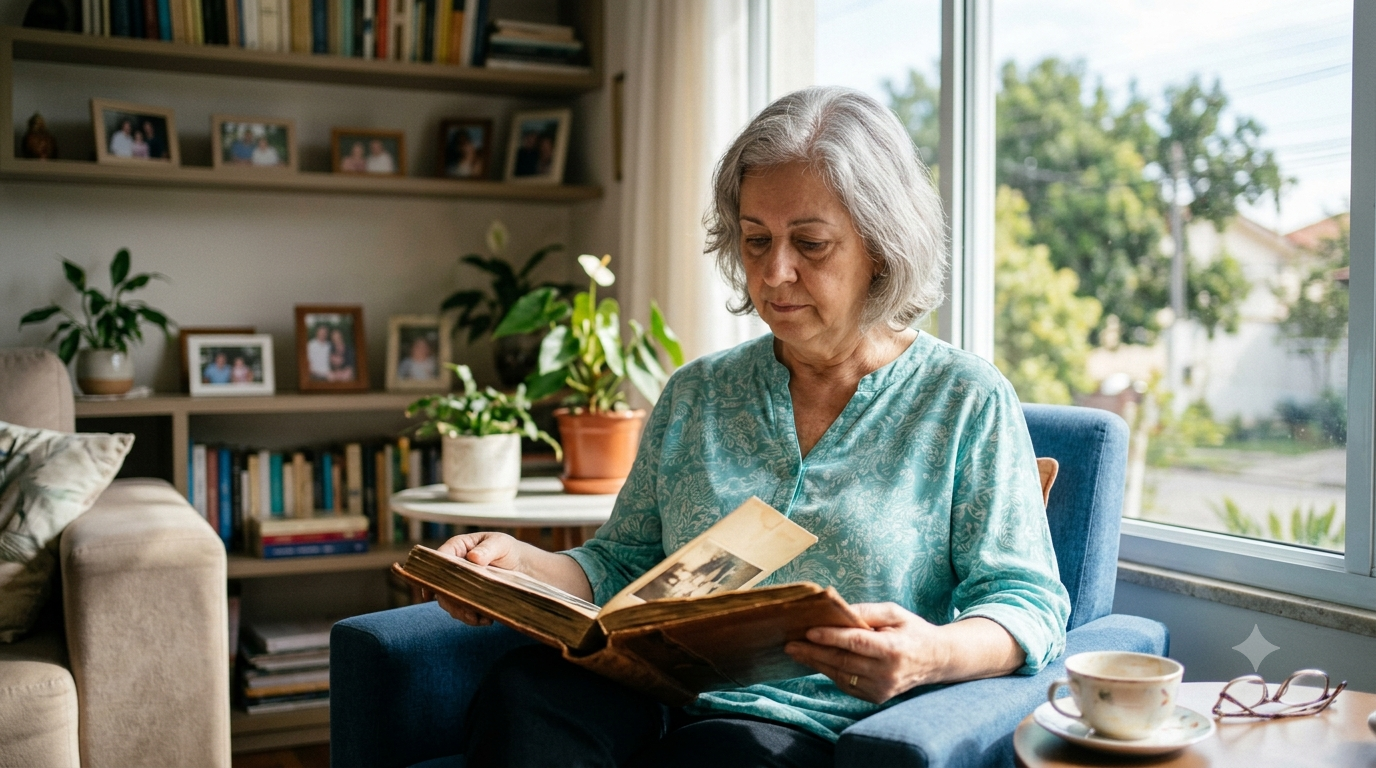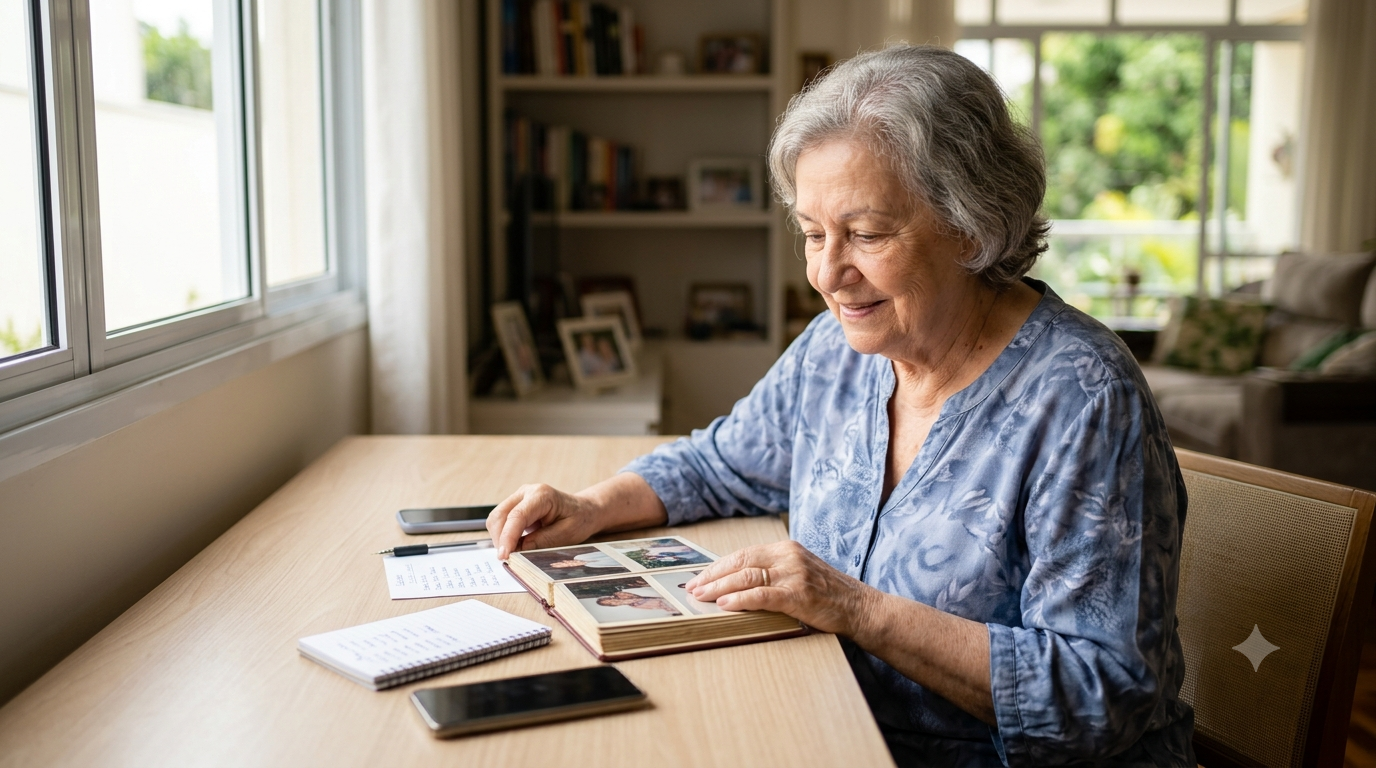
Brain health is an important part of healthy aging. Maintaining memory, reasoning abilities and independence helps older adults continue performing everyday activities and making decisions independently.
In addition to a healthy diet, physical activity, adequate sleep and management of conditions such as high blood pressure and diabetes, another factor deserves attention: social connection.
Regular contact with family members, friends, neighbors and other people may be associated with better cognitive health. On the other hand, social isolation and loneliness have been associated with a higher risk of cognitive problems and dementia in studies of older adults.
This does not mean that occasionally being alone causes dementia. The relationship is complex and may involve many different factors.
This content is for informational purposes only and does not replace personalized advice from a qualified healthcare professional.
What is brain health?
Brain health refers to the ability to maintain proper brain function throughout life.
It includes several aspects, such as:
- memory;
- attention;
- reasoning;
- language;
- decision-making;
- emotional regulation;
- maintaining independence.
Normal aging can cause some changes in memory and the speed at which information is processed. These changes do not necessarily mean that a person has dementia.
Brain health is influenced by many factors throughout life, including cardiovascular health, physical activity, nutrition, sleep, chronic diseases, cognitive stimulation and social relationships.
How is social connection related to brain health?
Social interaction provides regular stimulation for the brain.
Talking, telling stories, participating in group activities, solving problems together and keeping up with events in the community are situations that require attention, memory, language and reasoning.
Studies also suggest that older adults who maintain greater social integration tend to have better cognitive outcomes over time.
A 2026 systematic review evaluated studies on social relationships and cognitive impairment in older adults and identified associations between different characteristics of social relationships and the risk of cognitive problems.
However, it is important to remember that an association does not necessarily mean that one factor directly causes the other.
Does social isolation increase the risk of dementia?
Social isolation has been associated with a higher risk of dementia in several longitudinal studies.
Research published in the Journal of the American Geriatrics Society followed Medicare beneficiaries in the United States for nine years and found an association between social isolation and a higher risk of developing dementia.
Other studies have reported similar findings. Research published in Neurology also identified associations between social isolation, loneliness and subsequent dementia risk.
These findings suggest that maintaining social connections may be part of a broader strategy for promoting brain health.
However, it is not possible to say that social isolation alone causes dementia.
Are loneliness and social isolation the same thing?
No.
Although they are related, social isolation and loneliness are different concepts.
Social isolation mainly refers to the amount or frequency of a person’s social contacts and relationships.
Loneliness is the subjective feeling of being alone or of not having sufficiently satisfying relationships.
A person may have many social contacts and still feel lonely. Likewise, someone may spend considerable time alone without feeling lonely.
Both factors have been studied in relation to cognitive health and may be associated with different outcomes in aging.
Can talking to other people help keep the brain active?
Yes. Social interaction can provide cognitive stimulation in everyday life.
A conversation with a friend, for example, involves:
- remembering information;
- understanding what another person is saying;
- organizing thoughts;
- choosing words;
- paying attention;
- responding appropriately.
Research published in PLOS ONE evaluated the relationship between daily social interactions and performance on mobile cognitive tests among older adults. The findings suggested that changes in everyday social interactions were related to changes in cognitive performance.
This reinforces the idea that social activities do not need to be complicated to provide stimulation for the brain.
Which social activities can be good for older adults?
There is no single ideal social activity.
The most important thing is to find activities that are enjoyable and can be done regularly.
Some possibilities include:
- visiting family and friends;
- participating in community groups;
- attending senior centers;
- taking part in religious, cultural or volunteer activities;
- taking group classes;
- joining walking groups;
- playing cards or board games;
- participating in book clubs;
- doing crafts in a group;
- talking regularly with neighbors;
- participating in activities related to personal hobbies.
For some people, even a daily phone call or video call can help maintain contact with family and friends who live far away.
Can physical activity also benefit brain health?
Physical activity is important for both physical and brain health.
Walking, strength training, cycling, swimming and participating in group activities can help maintain physical function and independence.
When performed in a group, physical activity may provide two potential benefits: exercise and social interaction.
The American Heart Association emphasizes a broad approach to brain health that includes cardiovascular health and healthy lifestyle behaviors.
Managing blood pressure, diabetes, cholesterol and other cardiovascular risk factors is also part of protecting brain health.
Can hobbies help the brain?
Maintaining enjoyable and intellectually stimulating activities can be part of a lifestyle that supports brain health.
A study published in JAMA Network Open investigated lifestyle enrichment in later life and its association with dementia risk.
Social, cognitive and physical activities can contribute to a more active and diverse lifestyle.
Possible activities include:
- learning something new;
- reading;
- playing a musical instrument;
- doing crafts;
- studying;
- participating in cultural activities;
- exercising;
- maintaining social activities.
The goal is not to turn aging into a series of mandatory tasks, but to find activities that are meaningful and enjoyable.
What can be done when an older adult is socially isolated?
It is important to start gradually.
Someone who has spent a long time socially isolated may not feel comfortable joining large groups immediately.
Some simple strategies may help:
- Talk to someone close every day.
- Call a family member or friend.
- Arrange short visits.
- Participate in a group activity that matches personal interests.
- Go for a walk with someone.
- Resume an old hobby.
- Participate in community activities.
Small changes may be easier to maintain than a major change in routine.
Can social connection prevent dementia?
It is not yet possible to say that increasing social interaction alone prevents dementia.
Studies mainly show associations between social integration, social isolation, loneliness and the risk of cognitive impairment or dementia.
A meta-analysis of longitudinal studies published in the Journal of the American Geriatrics Society found an association between greater social integration and a lower risk of dementia.
However, people who are more socially integrated may also have other characteristics that favor good health, such as greater physical activity, better overall health and greater participation in cognitively stimulating activities.
Therefore, the best interpretation is that social connection may be one component of a lifestyle associated with better brain health.
Can social isolation be reversed?
In many cases, changes in the environment and daily routine can increase social participation again.
A study published in JAMA Network Open evaluated changes in social isolation and long-term outcomes among older adults. The findings reinforce the importance of considering not only a person’s level of social isolation at a given moment, but also how that level changes over time.
This means that a person who is socially isolated today does not necessarily have to remain in that situation.
Changes such as improved mobility, returning to community activities or reconnecting with family members can change the quantity and quality of social interactions.
When does social isolation require attention?
Social isolation deserves particular attention when it is accompanied by significant changes in behavior or functional ability.
Professional evaluation is important when an older adult develops:
- progressive memory loss;
- difficulty performing tasks that were previously done independently;
- frequent confusion;
- significant behavioral changes;
- loss of interest in activities that were previously enjoyable;
- persistent sadness;
- significant unintentional weight loss;
- frequent falls;
- increasing difficulty leaving the house.
These signs can have many different causes and do not necessarily mean dementia. However, they deserve evaluation.
How can older adults protect brain health?
Brain health should be approached broadly.
Important measures include:
- engaging in regular physical activity;
- controlling blood pressure;
- managing diabetes and cholesterol;
- not smoking;
- avoiding excessive alcohol consumption;
- maintaining a balanced diet;
- getting adequate sleep;
- participating in cognitively stimulating activities;
- maintaining meaningful social relationships;
- treating hearing and vision problems;
- preventing falls;
- having regular medical checkups.
None of these measures guarantees that a person will not develop dementia. However, they contribute to healthier aging and help preserve functional ability.
Frequently asked questions about brain health and social connection
Does being alone cause dementia?
Not necessarily. Social isolation is associated with a higher risk of dementia in some studies, but this does not mean that being alone is a direct cause of the disease.
Does talking help memory?
Social interaction involves memory, attention, language and reasoning. Studies suggest a relationship between social interactions and cognitive performance, but it is not possible to say that talking alone prevents dementia.
What is the best social activity for older adults?
There is no single activity that is best for everyone. The ideal choice is an activity that is enjoyable, safe and compatible with the person’s interests and abilities.
Is loneliness the same as social isolation?
No. Social isolation is related to the amount of social contact a person has, whereas loneliness is mainly related to the subjective perception that existing relationships are insufficient or unsatisfying.
Does physical activity help brain health?
Yes. Physical activity is part of a broad approach to brain health and also helps preserve strength, mobility and independence. Group activities may combine physical exercise with social interaction.
Do older adults need to join groups to protect their memory?
Not necessarily. What matters is maintaining meaningful social interaction that is compatible with the person’s preferences, abilities and circumstances.
Conclusion
Social connection is an important part of healthy aging.
Scientific studies have found associations between social isolation, loneliness, social integration and cognitive health. In different studies, older adults with greater social participation tend to have a lower risk of cognitive impairment and dementia.
However, these findings do not mean that lack of social interaction is a direct cause of dementia. Brain health is influenced by many factors, including physical activity, cardiovascular health, nutrition, sleep, cognitive stimulation and overall health.
Taking care of the brain as we age therefore involves more than doing memory exercises. It also means keeping the body active, managing health risk factors and maintaining meaningful social relationships.
A conversation with a friend, a walk with someone, a hobby, a class or a visit with family can be small but meaningful ways to make aging more active, independent and socially connected.