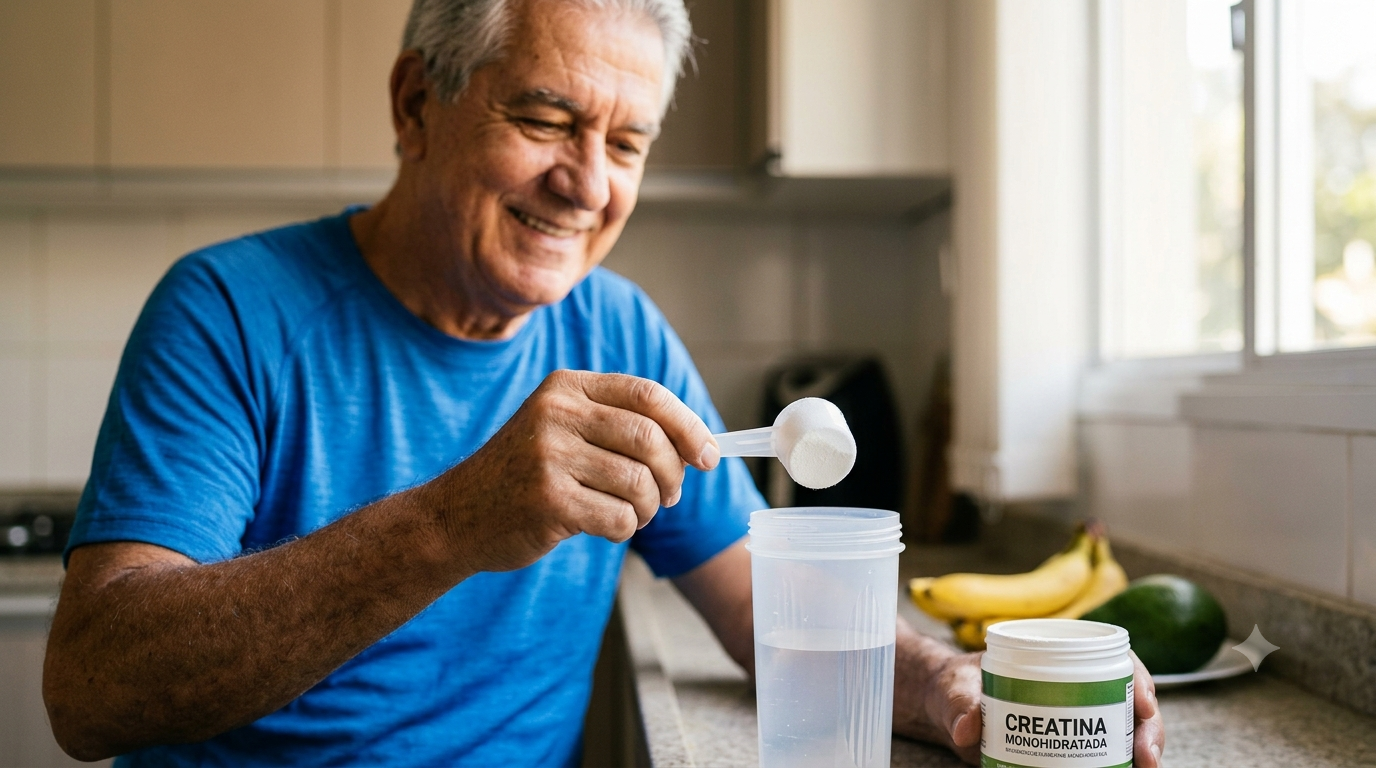
Creatine is one of the most extensively studied dietary supplements in the world. Although it is best known among athletes and people who perform resistance training, it has also gained attention for its potential to help older adults preserve muscle mass, increase strength, and maintain physical function.
This content is informational and does not replace individual medical or nutrition advice.
What is creatine?
Creatine is a naturally occurring compound produced by the body from amino acids. It is also found in animal-based foods, particularly meat and fish.
Its primary role is to provide a rapid source of energy for muscles and other tissues with high energy demands, including the brain.
During high-intensity activities, creatine helps regenerate adenosine triphosphate (ATP), the body’s main energy molecule, allowing muscles to perform more efficiently.
Why can creatine be beneficial for older adults?
As people age, they gradually lose muscle mass, strength, and physical performance, a condition known as sarcopenia.
This age-related decline is associated with:
- a higher risk of falls;
- fractures;
- loss of independence;
- difficulty performing daily activities;
- increased risk of hospitalization.
When combined with an appropriate exercise program, creatine may help reduce some of these age-related changes.
What are the benefits of creatine for older adults?
Numerous studies have shown that creatine monohydrate may provide several benefits, including:
- increased muscle mass;
- improved muscle strength;
- greater muscular endurance;
- better performance in activities of daily living;
- reduced exercise-related fatigue;
- improved quality of life.
These benefits are generally more pronounced in older adults who participate in regular resistance training.
Does creatine improve bone health?
Some studies suggest that creatine may contribute to bone health when combined with resistance exercise.
Potential benefits include:
- improved bone remodeling;
- increased bone thickness;
- improved bone mineral density.
However, current evidence remains inconsistent, and further research is needed before firm conclusions can be drawn.
Does creatine improve memory?
In recent years, researchers have become increasingly interested in creatine’s effects on the brain.
Some studies suggest improvements in:
- memory;
- attention;
- information processing speed.
These benefits appear to be more evident during periods of increased brain energy demand, such as sleep deprivation or the natural aging process.
Although these findings are promising, current evidence is still limited and does not support recommending creatine solely to prevent cognitive decline or dementia.
Who may benefit the most?
Creatine supplementation may be a useful addition for older adults with:
- sarcopenia;
- physical frailty;
- osteosarcopenia;
- osteoporosis associated with muscle loss;
- recovery following prolonged illness.
In these situations, supplementation should be part of a broader strategy that includes a balanced diet, adequate protein intake, and regular resistance exercise.
Does creatine work without exercise?
Probably much less effectively.
The greatest benefits of creatine occur when it is combined with resistance training, such as weightlifting.
Studies show that creatine supplementation alone produces small or inconsistent effects on:
- muscle mass;
- muscle strength;
- physical function.
In contrast, when combined with exercise, creatine enhances the improvements achieved through training.
What is the best type of exercise?
The most effective exercise programs combine creatine supplementation with resistance training performed approximately three times per week.
Exercises typically involve major muscle groups, such as:
- leg press;
- squats;
- knee extensions;
- chest press;
- seated rows;
- free-weight or machine-based exercises.
Programs lasting at least 12 to 16 weeks tend to produce the greatest improvements.
What is the recommended dose?
Creatine monohydrate is the form that has been studied the most.
For most older adults, research has used doses of:
- 3 to 5 grams per day;
or
- approximately 0.1 gram per kilogram of body weight per day.
Although some protocols include a loading phase of 20 grams per day for five to seven days, this is not essential. Taking 3 to 5 grams daily also gradually increases muscle creatine stores over several weeks.
Is there a best time to take creatine?
Current evidence suggests that taking creatine shortly after resistance training may produce slightly greater gains in muscle mass than taking it before exercise.
On non-training days, the timing appears to matter very little. Consistency with daily intake is far more important.
Is creatine safe?
For most healthy individuals, yes.
Creatine monohydrate is considered a safe dietary supplement and is among the best-studied supplements in sports nutrition.
Research has not shown an increased risk of kidney disease in healthy individuals taking recommended doses.
However, people with chronic kidney disease or other significant medical conditions should consult their healthcare provider before starting supplementation.
It is also important to choose high-quality products and follow recommended dosages.
How long does it take to work?
The benefits do not occur immediately.
Without a loading phase, daily supplementation gradually increases muscle creatine stores over approximately three to four weeks.
Improvements in muscle strength and lean mass typically develop over several months, particularly when combined with resistance training.
What happens if you stop taking creatine?
After supplementation is discontinued, muscle creatine stores gradually decline and usually return to baseline within approximately four to six weeks.
As a result, some of the benefits also gradually diminish, especially if resistance training is not maintained.
Should every older adult take creatine?
No.
Although creatine is considered safe for most people, it is not necessary for every older adult.
It appears to provide the greatest benefit for individuals who:
- perform regular resistance training;
- have sarcopenia;
- are physically frail;
- want to maximize the benefits of strength training;
- have a low dietary intake of creatine.
Conversely, sedentary older adults with a balanced diet and no evidence of muscle loss are less likely to experience substantial benefits.
The decision to use creatine should be individualized, taking into account nutritional status, existing medical conditions, physical activity level, and personal health goals.
Final message
Creatine is one of the dietary supplements supported by the strongest scientific evidence for promoting muscle health in older adults. When combined with resistance training, it can increase muscle strength, preserve lean muscle mass, and improve physical function, contributing to healthier and more independent aging.
However, creatine should not replace the foundations of healthy aging, including regular physical activity, adequate daily protein intake, and a balanced diet. For most older adults, creatine should be considered a complement to these lifestyle habits rather than the primary strategy for maintaining muscle health.
Before starting creatine supplementation, it is advisable to consult a physician or registered dietitian, especially for individuals with chronic kidney disease or other medical conditions that require individualized assessment and follow-up.