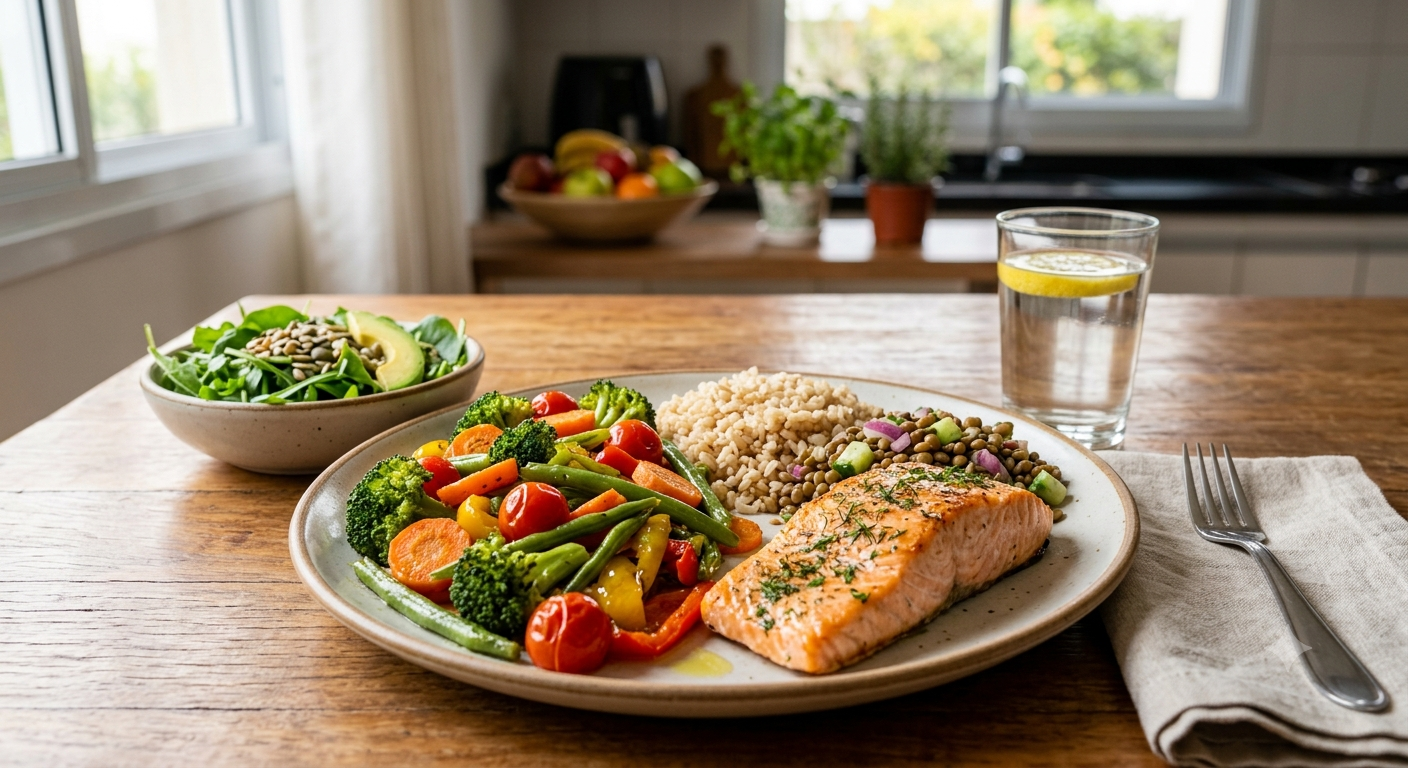
After 50, nutrition does not need to become a list of prohibitions. A more useful approach is to strengthen the foundation: minimally processed foods, reliable protein sources, fiber, fruits, vegetables, beans, grains, and water.
This content is educational. Nutrition needs vary according to weight, health conditions, medication, kidney function, physical activity, and goals. For individual guidance, consult a dietitian or physician.
Why protein matters
Protein supports muscles, bones, skin, and immune function. In older adults, preserving muscle mass is important for mobility and independence.
Good sources include eggs, fish, poultry, lean meats, milk and dairy, beans, lentils, chickpeas, tofu, nuts, and seeds. The best choice depends on culture, budget, preferences, and health conditions.
One simple strategy is to distribute protein throughout the day instead of concentrating it at dinner.
Fiber does more than support digestion
Fiber is found in fruits, vegetables, beans, oats, seeds, and whole grains. It supports satiety, bowel function, and overall diet quality.
People who eat little fiber should increase it gradually and drink enough water. Increasing too quickly can cause gas or discomfort.
A simple, sustainable plate
A practical plate can combine vegetables, a protein source, and a good-quality carbohydrate such as rice, potatoes, cassava, or whole grains. Beans and lentils can play a double role by offering carbohydrates, fiber, and plant protein.
Long-term dietary patterns usually matter more for longevity than any single food.