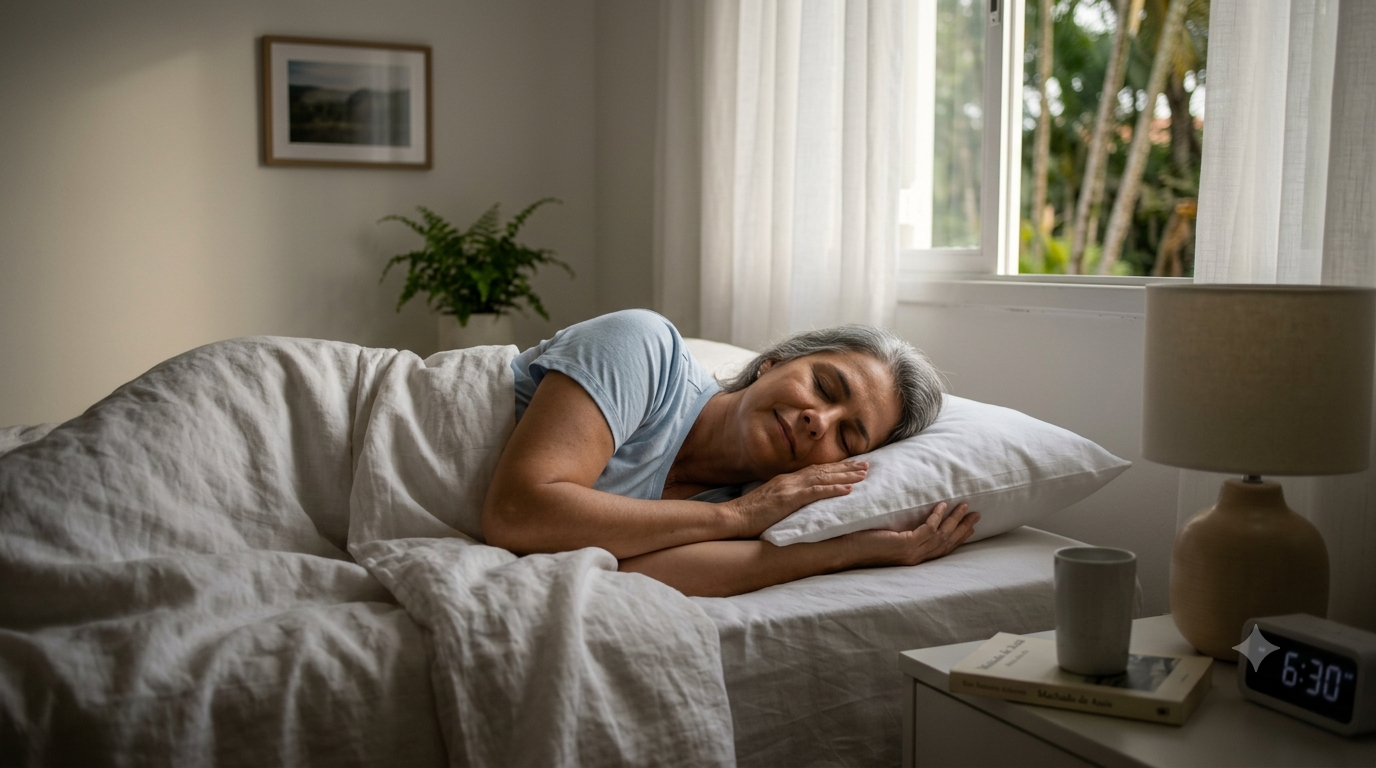
Good sleep is not a luxury. Sleep supports mood, memory, metabolism, and physical recovery. After 50, many adults notice lighter sleep, more nighttime awakenings, or more sensitivity to irregular schedules.
This article is informational and does not replace medical evaluation. Loud snoring, breathing pauses, severe daytime sleepiness, persistent insomnia, or frequent use of sleep medication should be discussed with a health professional.
What changes with age
Aging can affect the circadian rhythm, the body’s internal clock. Some people feel sleepy earlier and wake earlier. Others notice that long daytime naps make nighttime sleep harder.
These changes do not mean poor sleep is inevitable. A practical goal is to give the body predictable signals: morning light, daytime movement, lighter evening meals, and a consistent sleep environment.
Habits that support sleep
Try to keep similar sleep and wake times, including on weekends. Regularity is often more useful than a perfect routine.
Morning daylight helps reinforce the sleep-wake cycle. Regular physical activity may also help, although intense exercise close to bedtime can disturb sleep for some people.
Caffeine deserves attention. Coffee, black tea, mate tea, soda, and some supplements can affect sleep for several hours. If sleep is irregular, consider limiting caffeine after early afternoon.
Environment and technology
The bedroom should support rest: comfortable temperature, low light, and low noise. Phones and television can delay sleep by keeping the mind stimulated. A simple rule is to reserve the final 30 to 60 minutes for calmer activities.
If you wake during the night, avoid turning the clock into an opponent. Repeatedly checking the time often increases anxiety. When sleep does not return, a quiet activity in dim light may be better than fighting the bed.
When to seek help
Seek guidance if sleep difficulty lasts several weeks, if energy drops sharply, if mood changes, or if sleep apnea is suspected. Poor sleep can have treatable causes, including pain, anxiety, depression, medication effects, reflux, and breathing changes.